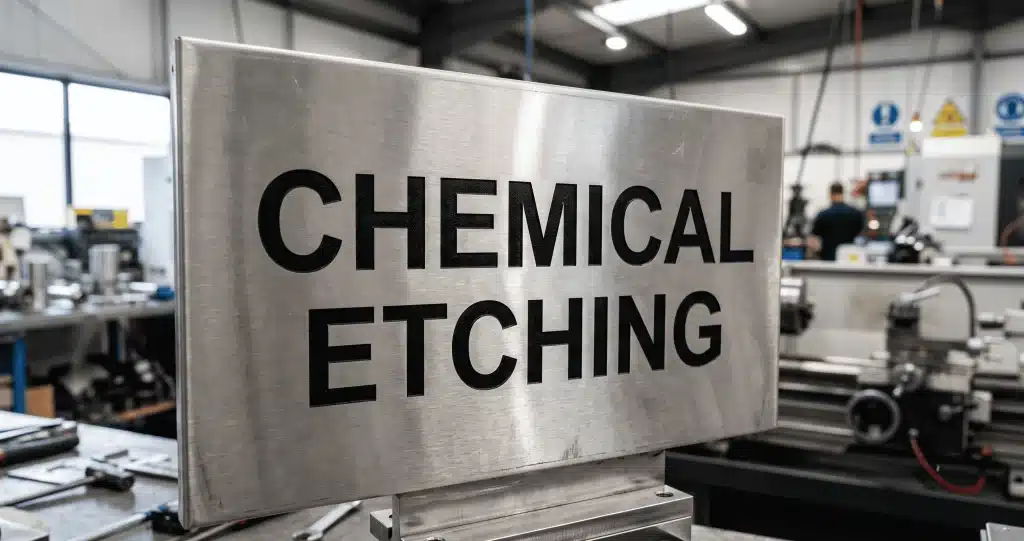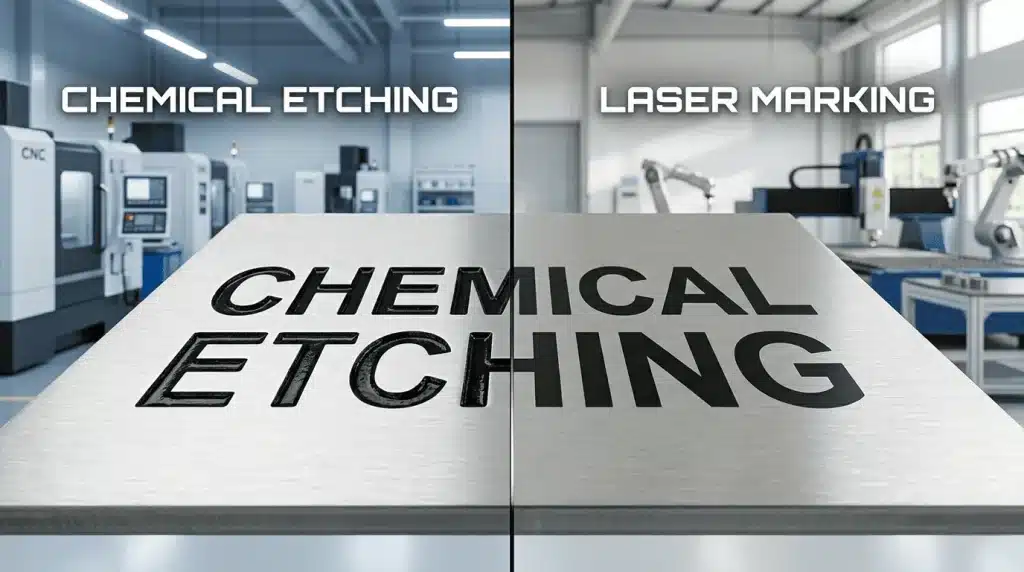


Within the world of commercial identity, there are many approaches to put a mark on metal. You can print it, stamp it, laser it, or etch it. For a customer, those may all appearance similar whilst the plate is latest. A black brand on a silver plate seems like a black emblem on a silver plate. However, give it two years of exposure to sunlight, saltwater, or factory grit, and the distinction becomes obvious. One mark will fade away. The alternative will stay forever.
At our facility, we concentrate on Chemical Etching. Even as we’ve cutting-edge laser capabilities, we champion etching for nameplates that need to live to tell the tale inside the actual global. Clients regularly ask us: “Why is etching higher than laser marking?” This manual breaks down the technical variations, the lifespan, and the manufacturing science behind those famous techniques, ensuring you’re making the right desire for your Stainless Steel Nameplates and Precision Scale Plates.
What’s the distinction between laser marking and chemical etching?
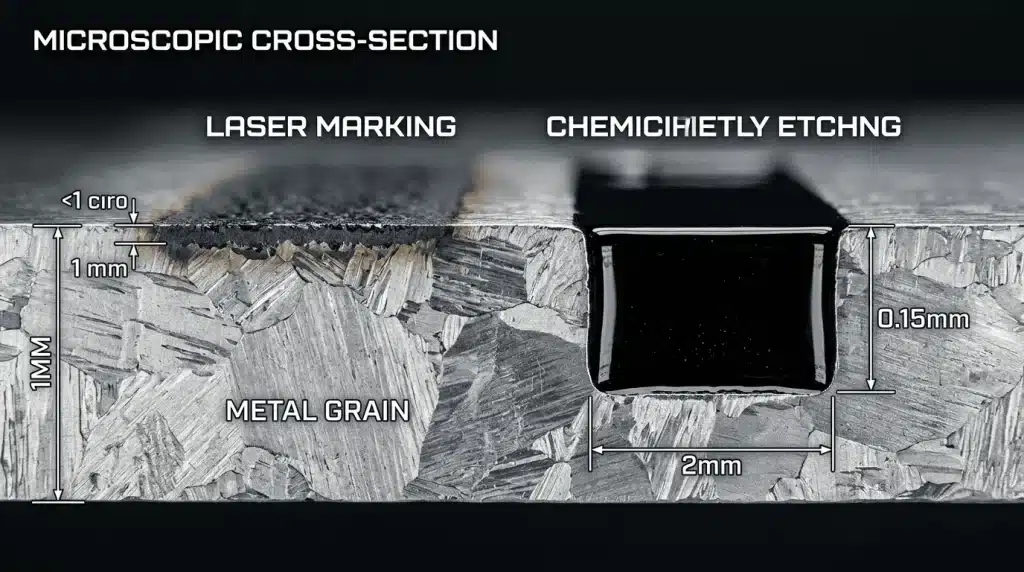
The essential difference is depth. Laser marking usually alters the floor colour of the metal (annealing) without cutting into it, or removes a microscopic layer. Chemical etching makes use of acid to bodily dissolve the metal, creating a deep, recessed hollow space (commonly zero.1mm to zero.15mm deep) this is then packed with long lasting teeth paint. Think of it like writing on a whiteboard versus carving into a rock.
1. Laser Marking (The floor answer)
Present day Fiber Lasers are great equipment. They use a high-powered beam of mild to heat the stainless-steel.
- Annealing: The laser heats the metallic just enough to oxidize it, turning it black. The floor stays smooth.
- Engraving: The laser vaporizes a tiny little bit of steel to create a mark.
- The hassle: Maximum laser marks are extremely shallow. In case you rub them with an abrasive pad or they get hit through a sandstorm, the black mark can be worn off because it’s miles sitting at the surface pores and skin of the metal.
2. Chemical Etching (The Structural answer)
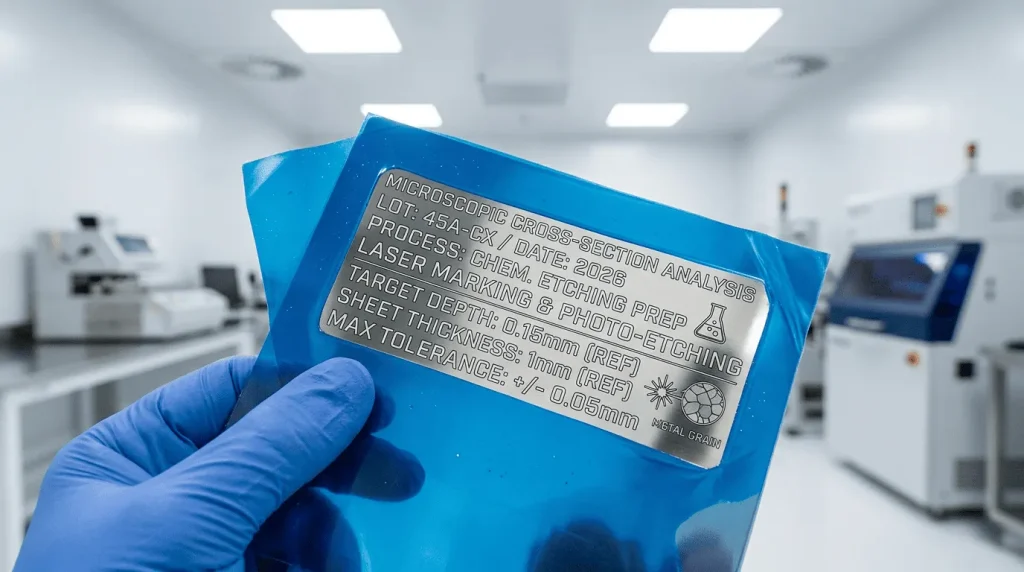
Chemical etching is a photolithographic manner. We do not just burn the floor; we get rid of fabric.
- The masks: We cover the plate with a UV-resistant masks (like a stencil).
- The Acid: We spray acid (Ferric Chloride) onto the plate. The acid eats away the uncovered metallic, digging a trench.
- The depth: This creates a bodily “valley” inside the steel. The text is no longer just a coloration; it is a three-dimensional characteristic of the metal plate.
Hybrid production: The great of both Worlds
Even as we argue that etching is superior for the template of the nameplate, Laser Marking has a particular position.
The Hybrid technique: for lots clients, we produce “Etched Shells.”
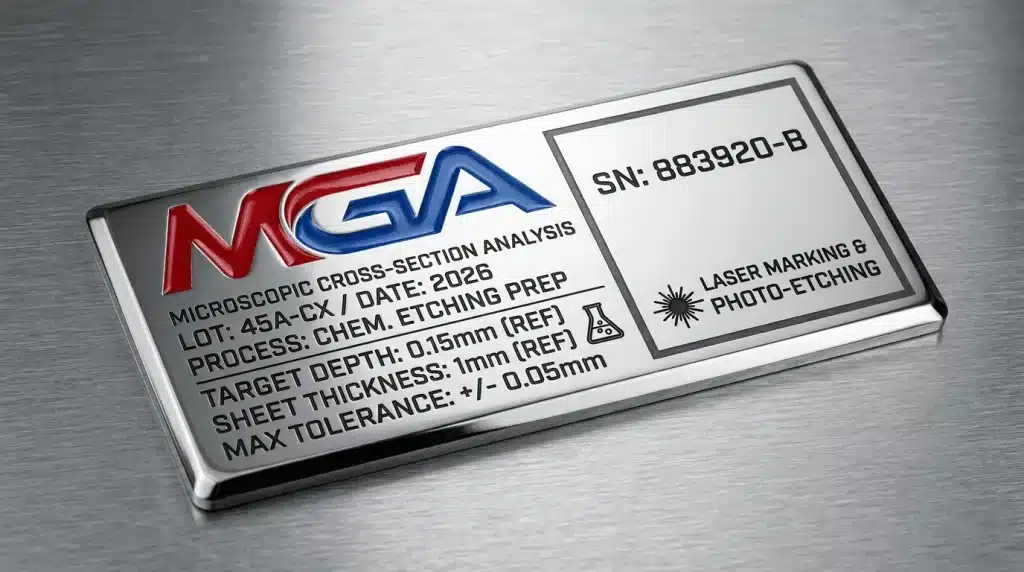
- Etching: We etch the corporation logo, the static text (Voltage, model, producer), and the table grid. We fill this with colored paint. This ensures the branding looks top class all the time.
- Laser Marking: We leave clean silver containers for the “Variable records” (Serial range, Date of Mfg). We then use a CNC Laser to mark the specific quantity on each plate just before transport.
This mixture gives you the premium look and durability of etching, with the power of changing serial numbers for each single unit.
Environmental & Quality Standards
Chemical etching involves acids, so it must be finished responsibly. Our manufacturing facility utilizes a closed-loop filtration system. The acid used to etch the chrome steel is neutralized and recycled. Furthermore, due to the fact etching is a digital-to-physical method (the usage of CAD documents to print the movie mask), the reproduction exceptional is a hundred percent consistent.
- If you order a nameplate these days, and every other one in five years, the etched lines can be precisely the identical thickness.
- There may be no “tool put on” like with mechanical engraving bits that get dull and make sloppy lines.
Conclusion
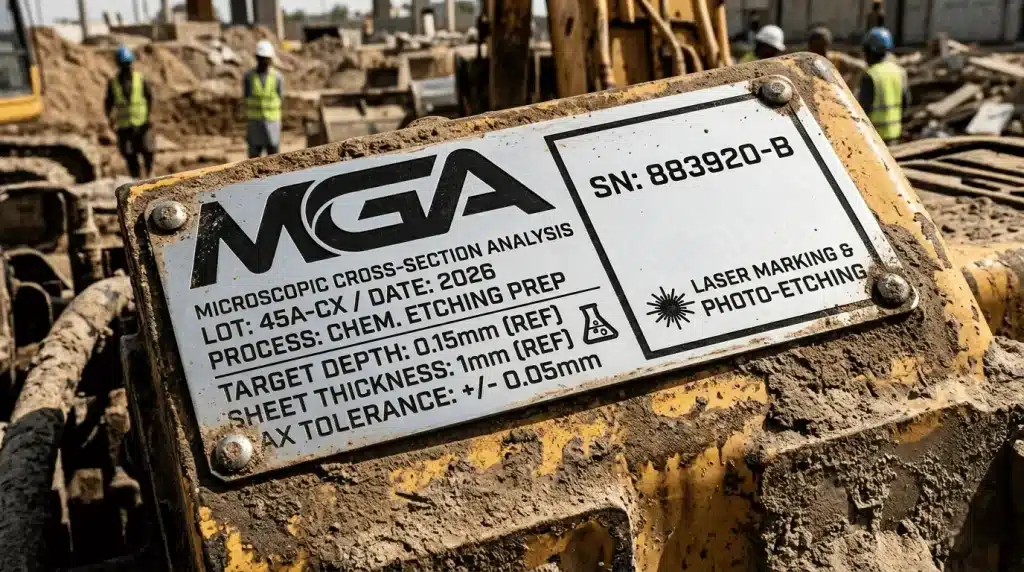
When you choose Deep Chemical Etching on your stainless-steel Nameplates, you are making an investment in exceptional. You’re buying a system that bodily modifies the metallic to make certain your information survives.
- Laser marking is quicker and cheaper, but it’s miles floor-degree.
- Etching is deeper, stronger, and more prestigious.
In case your equipment is constructed to last two decades, your nameplate must be too. Don’t let a faded label be the motive your gadget seems vintage. Pick out the permanence of deep etching.
Frequently Asked Questions (FAQs)
Is chemical etching high-priced?
It has a better setup price (developing the movie device) compared to laser marking, which desires no tooling. However, for bulk orders (100+ plates), etching becomes very fee-powerful. For a single prototype, laser is less expensive. For manufacturing runs, etching gives higher price.
Can you etch colors other than black?
Sure. Considering that we use display screen printing to fill the etched areas, we will fit any Pantone colour. We will create a nameplate with a Blue emblem, red caution textual content, and Black information, all at the same metal plate.
Does etching weaken the steel?
No. Due to the fact we commonly etch simplest 10-15% of the thickness of the steel (e.g., 0.15mm deep on a 1.0mm plate), the structural integrity of the plate remains unchanged.