

304 vs 316 Stainless Steel: When you order custom stainless-steel nameplates for machinery, choosing the right steel grade is the maximum crucial selection. The sturdiness of your identity plate depends completely on the fabric you pick.
Two of the maximum not unusual grades used in production are 304 stainless steel and 316 stainless steel. At the surface, they appearance same. Both can be polished to a reflect finish or given a matte brushed texture. However, their internal chemical make-up determines how lengthy they’ll last in harsh environments.
This guide explains the important thing differences among those alloys to help you decide which one is proper in your industrial undertaking.
What’s stainless steel consists of?
Stainless-steel consists of iron, carbon, and not less than 10.5% chromium. The chromium produces a passive oxide layer at the surface that helps to safe from rust and corrosion. Different elements like nickel, manganese, and molybdenum are introduced to decorate long lasting and formability.
To apprehend why stainless-steel is so sturdy, we must observe its chemistry. Each of the day metal rusts because iron reacts with oxygen to shape iron oxide (rust). Regular steel is one-of-a-kind because the chromium reacts with oxygen to form a skinny, invisible guard. If the metallic is scratched, this guard “heals” itself.
For business nameplates, we use “Austenitic” chrome steel. This kind contains high ranges of chromium and nickel.
• Chromium: Gives rust resistance.
• Nickel: Adds sturd and hardness, which make the metallic hard even at high temperature.
How to differentiate 304 and 316 stainless steel?
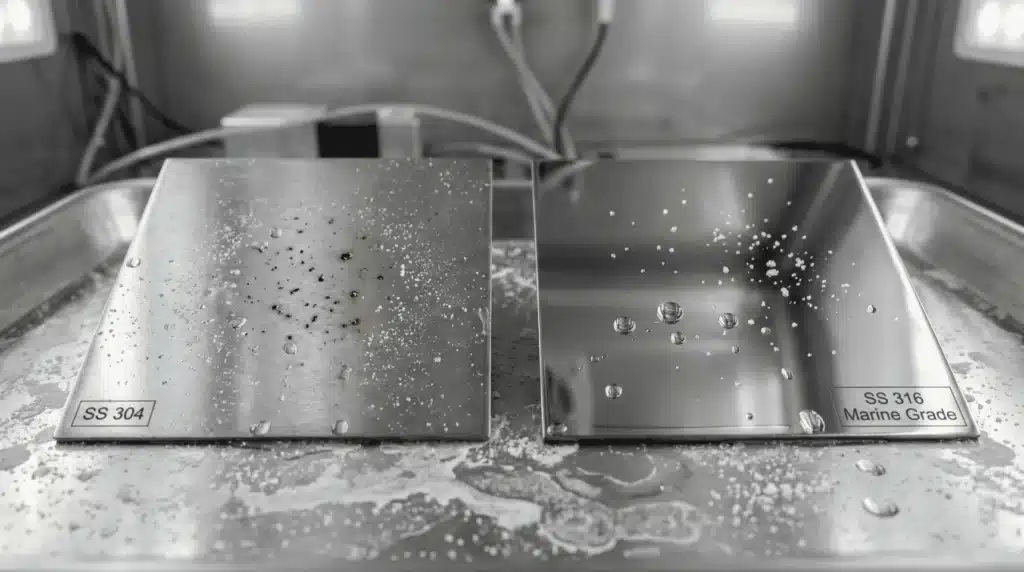
316 steel has 2% to 3% molybdenum, and if you will see the other side the 304 stainless-steel does not have. This addition of molybdenum provides 316 advanced resistance to corrosion, very specifically against the chlorides, business solvents, and saltwater. 304 is the usual “18/8 ” grade appropriate for well known use.
Even as each grades belong to the 300-series (austenitic own family), their overall performance varies significantly in competitive environments.
304 Stainless Steel (The usual)
That is the maximum broadly used stainless-steel within the world. You’ll locate it in kitchen appliances, sinks, and indoor business equipment. It is often referred to as “18/8 ” stainless steel because it incorporates roughly 18% chromium and 8% nickel.
• Pros: Great corrosion resistance in ordinary situations, easy to shape, and extra inexpensive.
• Cons: At risk of chlorides (salt) and vicious acids.
316 Stainless Steel (The Marine Grade)
That is the premium desire for harsh conditions. The addition of molybdenum converts the chemical structure, allowing the metallic to resist pitting and crevice corrosion.
• Pros: Resists salt, chlorides, and chemical acids. Critical for marine and pharmaceutical use.
• Cons: Extra expensive than 304.
Although both grades are part of the 300-series (austenitic family), their performance varies to a great extent in harsh environments.
For environments exposed to salt, chemicals, or moisture, choosing the correct steel grade is crucial. Learn more about how stainless steel reacts to these conditions in Does stainless steel rust?.
Which grade should you select for nameplates?
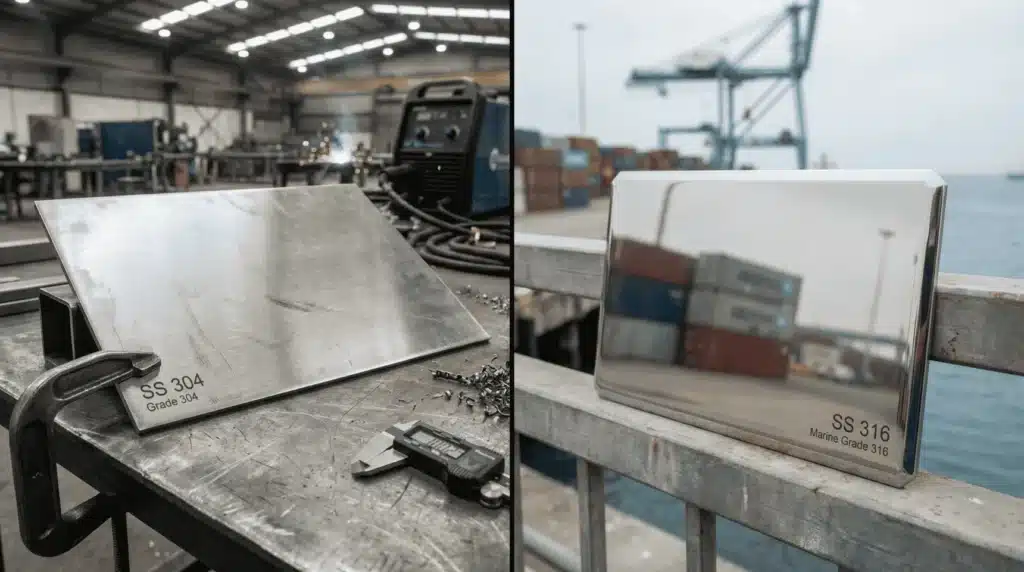
You have to pick out 304 chrome steel for indoor machinery and widespread workplace signage, at the same time as 316 stainless steel is best for outside gadget, marine vessels, and chemical processing plants where publicity to salt or acid is likely.
Making the incorrect desire can result in failed inspections or illegible facts plates inside a few months. Here’s a breakdown of when to use each grade for your Precision Scale Plates and Nameplates:
While to apply 304 Grade:
• Indoor machinery: Lathes, CNC machines, and manage panels inner a manufacturing unit.
• Office Signage: Ornamental branding and door plates.
• Kitchen equipment: Meals processing areas which might be cleaned frequently however now not exposed to harsh chemical compounds.
• Dry exterior: Areas with low humidity and no proximity to the sea.
Conclusion
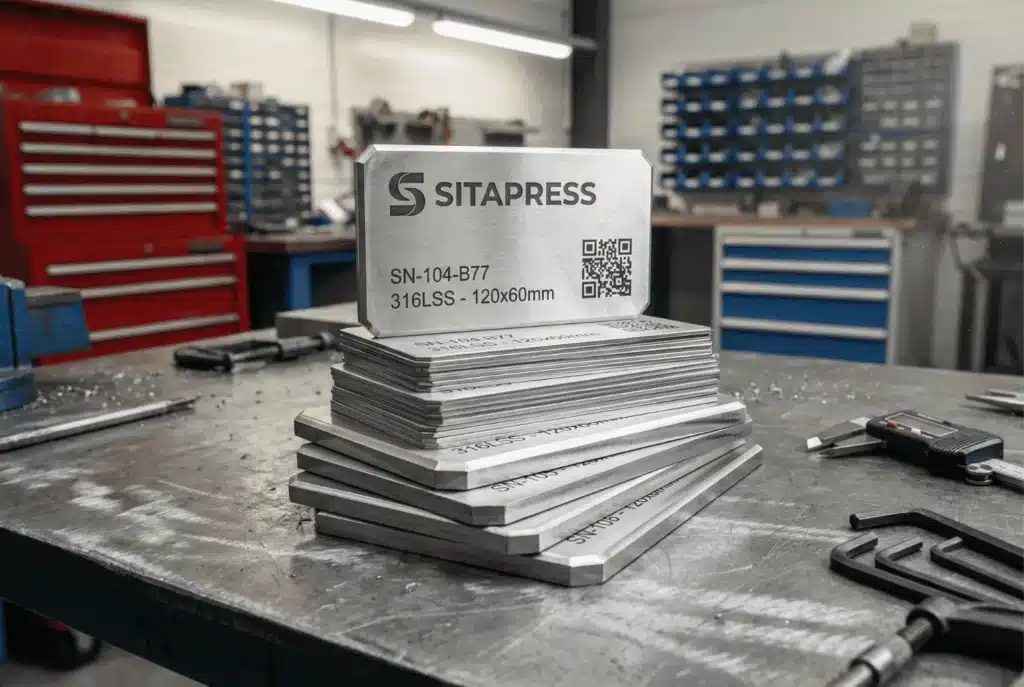
Choosing between 304 vs 316 stainless steel comes right down to your surroundings. if you need Precision Scale Plates or commercial Nameplates so one can sit down inside a warehouse or manufacturing house, 304 is a long lasting and in your price range winner.
However, if your device faces the sea, harsh chemical substances, or severe weather, 316 is the most effective option that ensures long-time period readability.
At our facility, we inventory each grades in diverse thicknesses (0.5mm to 4mm) to make certain your custom plates meet your exact engineering specs.