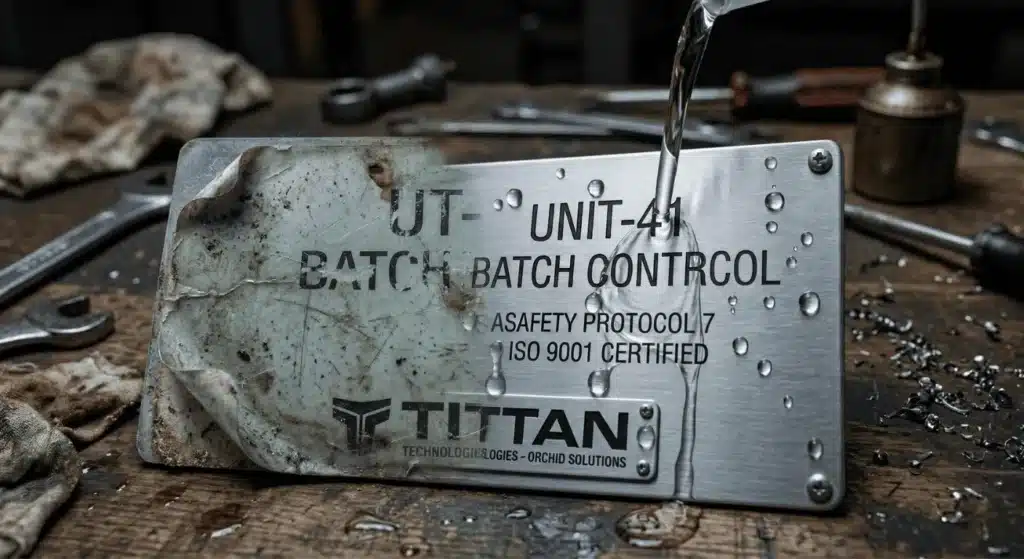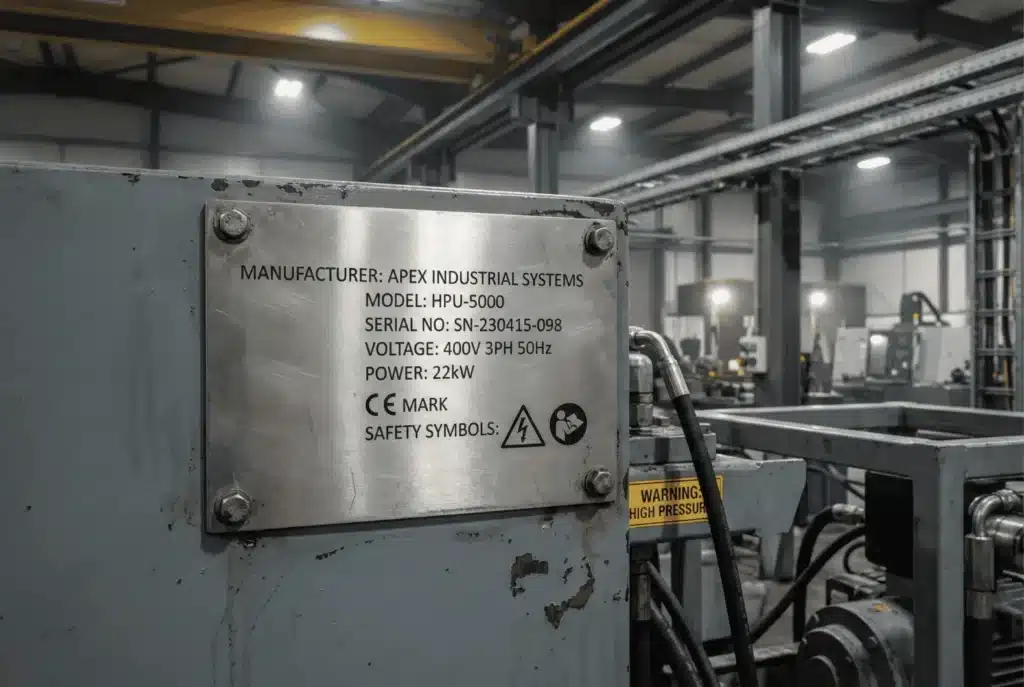

In a super world, equipment would stay easy, dry, and untouched. In the actual global of enterprise, equipment is sprayed with degreasers, splashed with acids, and scrubbed with caustic sanitizers. If you have ever seen a safety label that has become white or peeled off a system, you have got visible the end result of terrible chemical resistance. While identity fails, safety fails. Operators can’t study the voltage ratings, and maintenance teams cannot scan the QR codes.
For industries like petrochemicals, prescription drugs, and food processing, the material used for nameplates have to be chemically inert. That is wherein chrome steel Nameplates prove their well worth. This guide explores how chemically etched plates face up to the most harsh industrial solvents and why chrome steel is the most effective material that survives wherein others dissolve.
How does chemical etching withstand solvents?
Chemical etching withstands solvents because the method bodily gets rid of metal to create a recessed design. Not like floor-published labels where the ink sits on pinnacle, etched text is sunken into the metallic. Even though a harsh solvent washes away the paint fill, the legibility stays everlasting because of the depth of the metal reduce.
To recognize this sturdiness, we must examine it to conventional printing techniques.
The “Surface Print” Weakness
Imagine a wellknown display-published aluminum tag or a polyester sticky label. The ink sits at the surface.
• In case you spill Acetone or MEK (Methyl Ethyl Ketone) common industrial thinners on that label, the ink basically turns lower back into liquid. • One wipe with a rag, and your serial quantity is long past. The tag is now a blank piece of metal.
The “Etched” Benefit
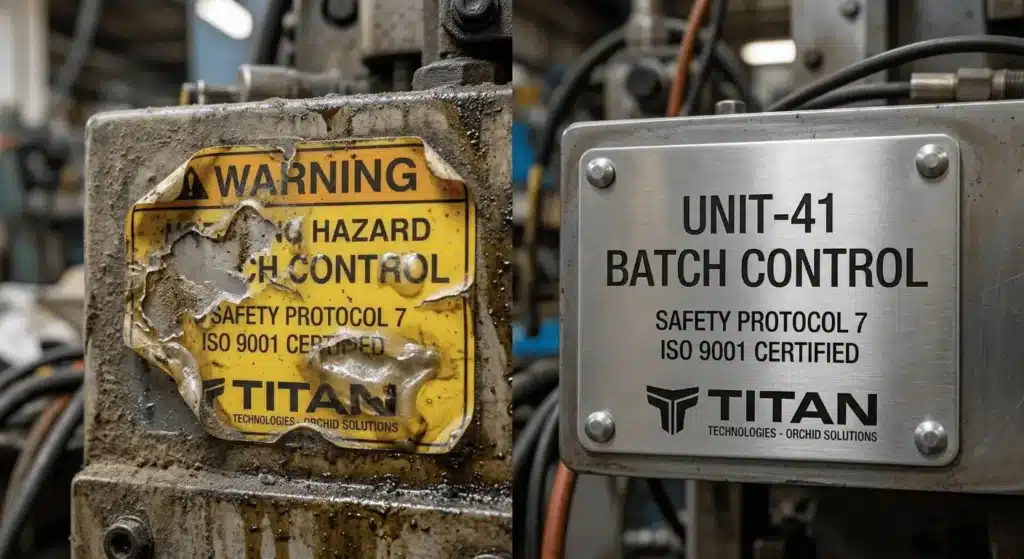
With Deep Chemical Etching, we use acid to chunk into the steel, developing a trench for the letters. We then fill this trench with epoxy ink.
• State of affairs: An operator by accident spills a sturdy solvent on the nameplate. • Result: The solvent would possibly attack the epoxy ink in the letters. • The Fail-secure: Even if the ink dissolves completely, the text remains readable. The letters are nevertheless carved into the metallic. The evaluation is lower (silver-on-silver), but the records is physically there. This fail-safe mechanism is why etching is obligatory for regulated industries.
First-class Nameplates for Chemical plant life
For chemical plant life, fertilizer facilities, and offshore rigs, 316L chrome steel is the only possible choice. Its molybdenum content material offers unique resistance to chlorides, sulfuric acid, and sulfurous environments that could hastily corrode popular 304 chrome steel or aluminum. In a chemical plant, the air itself can be corrosive. Fumes from procedures determine surfaces and mix with humidity to form weak acids.
The function of Passivation in Chemical Resistance
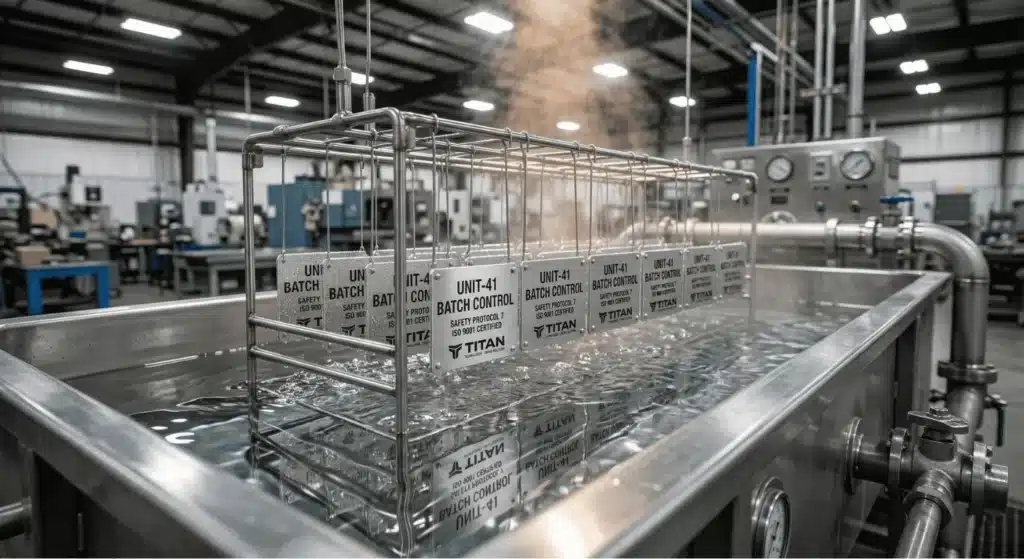
We have mentioned “Passivation” in previous articles, but in the context of chemical resistance, it is your first line of defense.
The function of Passivation in Chemical Resistance
we’ve got mentioned “Passivation” in previous articles, but within the context of chemical resistance, it is your first line of defense.
Whilst we manufacture your nameplates, the very last step is a chemical tub (usually Nitric or Citric acid). Why can we do this?
- Iron removal: It eats away any microscopic iron debris left from the reducing blades.
- Oxide Improve: It forces the chromium at the surface to react with oxygen, developing a thicker, greater uniform “passive layer.”
This exquisite-charged passive layer is what lets in the plate to face up to a splash of mild acid. without passivation, the acid might find a weak point (a microscopic iron particle) and start a corrosion pit. by ensuring each plate is passivated, we supply your asset identification the excellent threat of survival in a chemical environment.
Conclusion
Chemical resistance isn’t just about the metallic no longer dissolving; it’s far about the facts final seen. Even als plastics come to be brittle and crack when uncovered to solvents, and aluminum dissolves when exposed to caustics, chrome steel Nameplates stand firm. Via combining the natural chemical resistance of AISI 304/316 alloys with the bodily sturdiness of Deep Chemical Etching, we create identity products that continue to exist the harshest cleansing cycles and accidental spills. whether or not you’re “cleaning stainless steel pans” in a industrial kitchen or washing down a reactor in a chemical plant, the precept remains the identical: recognize the chemistry, pick out the proper grade, and keep away from chlorides.
Frequently Asked Questions (FAQs)
Does vinegar harm stainless steel?
No, white vinegar (acetic acid) is usually safe for cleansing stainless-steel nameplates. It’s far really first rate for disposing of hard water spots or lime scale. But, do now not soak the metallic in vinegar for extended durations (days), as it may ultimately etch the surface.
Can I use brake cleaner on stainless steel nameplates?
Sure, brake cleanser is normally a mixture of solvents like acetone and heptane. it’s going to now not damage the chrome steel metallic. However, it’s far very competitive towards paints. if your nameplate has screen-printed logos, brake cleanser will possibly wipe them off. If the plate is etched, the metallic text can be exceptional.
Is 304 stainless steel acid resistant?
304 is a very strong opposed to environmental acids and oxidizing acids. However, its not a strong evidence opposed to sulfuric and hydrochloric acid. For those areas with sturdy mineral acids, you should upgrade to 316 or some specialized alloys.